
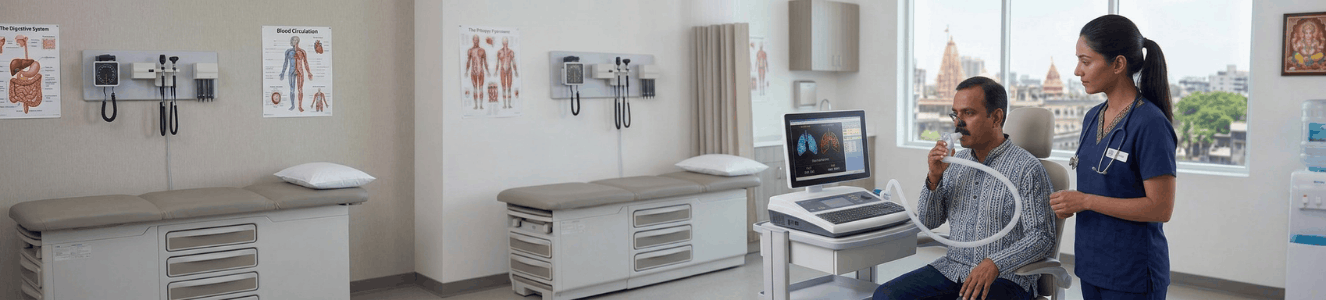
What Is a Pulmonary Function Test and When Is It Needed?
Quick Answer
A pulmonary function test is a group of breathing tests used to check how well the lungs are working. It measures different aspects of breathing, such as how much air the lungs can hold, how quickly air can move in and out, and how effectively the lungs transfer gases.
Doctors may recommend this testing when a person has ongoing breathing symptoms or when they need to monitor an existing respiratory condition. Common reasons include:
- Persistent cough or frequent coughing
- Shortness of breath during daily activities or exercise
- Wheezing or chest tightness
- Reduced exercise tolerance
- Suspected or diagnosed asthma or COPD
- Monitoring changes in an existing lung condition
The test is generally non-invasive and is performed using specialized equipment that records breathing patterns and lung function. The results are interpreted along with the person’s symptoms, medical history, physical examination, and other clinical findings.
Depending on the symptoms and suspected condition, additional tests may also be recommended. Early evaluation of persistent breathing problems can help doctors identify possible causes and decide whether further respiratory assessment or treatment is needed.
What Does a Pulmonary Function Test Measure?
A PFT can provide useful information about airflow, lung volume, and how effectively the lungs are functioning. The exact measurements depend on the type of testing recommended.
Common measurements may include:
- The amount of air a person can breathe in and out
- How quickly air can be exhaled
- The amount of air remaining in the lungs after exhalation
- How effectively gases move between the lungs and bloodstream
These measurements can provide information about airflow, lung volume, and gas exchange.
Why Might a Doctor Recommend Lung Function Testing?
A doctor may recommend testing when symptoms suggest that the lungs or airways are not functioning normally.
A PFT for lungs may be recommended when symptoms such as persistent cough, shortness of breath, wheezing, or reduced exercise tolerance suggest that the lungs or airways may not be functioning normally.
Common reasons include:
- Persistent cough
- Shortness of breath
- Wheezing or chest tightness
- Reduced exercise tolerance
- Recurrent respiratory symptoms
- Monitoring a known lung condition
- Assessment before certain procedures
- Effects of smoking or occupational exposure
What Conditions Can It Help Evaluate?
Lung function testing may be part of the evaluation of several respiratory conditions.
Asthma
Asthma can cause wheezing, coughing, chest tightness, and difficulty breathing. Lung function measurements may help assess airflow limitation and monitor changes over time.
Chronic Obstructive Pulmonary Disease
Chronic obstructive pulmonary disease can cause persistent breathing difficulties and reduced airflow. Testing may help assess airflow limitation and monitor the condition.
Other Respiratory Conditions
Testing may also contribute to the evaluation of conditions involving reduced lung volumes or impaired gas exchange. Results need to be interpreted with symptoms, medical history, examination findings, and other investigations.
How Is the Test Performed?
The procedure is usually performed using specialised equipment connected to a breathing device. The patient follows instructions about breathing in and out.
For some measurements, the person may take a deep breath and then exhale as forcefully or completely as possible. Several attempts may be required for reliable measurements.
A doctor may also recommend additional measurements or repeat testing after a prescribed inhaled medicine to assess changes in airflow.
How Should You Prepare?
Preparation varies depending on the test. Patients may receive instructions about smoking, exercise, food, drinks, or medicines. Some inhaled medicines may need to be temporarily withheld, but only if instructed by the treating healthcare professional.
Patients should also inform the medical team about current medicines, symptoms, recent illness, and relevant medical conditions.
What Can the Results Tell You?
The results provide information about airflow, lung volume, and gas exchange. Doctors may compare measurements with expected values based on factors such as age, height, and sex.
An abnormal result does not always indicate one specific disease, while a normal result does not rule out every respiratory condition. Findings are interpreted alongside symptoms, medical history, examination, and other tests.
If needed, further testing, treatment, monitoring, or specialist review may be recommended.
When Should You See a Respiratory Specialist?
Persistent breathing symptoms should not be ignored, particularly when they interfere with daily activities.
Medical evaluation may be appropriate for:
- Ongoing shortness of breath
- Repeated wheezing
- A cough that does not improve
- Frequent chest tightness
- Reduced exercise tolerance
- Recurrent respiratory infections
- Breathing difficulties after smoking or workplace exposure
A respiratory specialist can assess the symptoms, review medical history, and determine whether lung function testing or other investigations are appropriate.
What Other Tests May Be Needed?
Lung function testing is only one part of respiratory evaluation. Depending on symptoms and the suspected condition, doctors may recommend chest X-rays, CT scans, blood tests, oxygen measurements, sleep studies, allergy-related tests, or bronchoscopy.
At Synergy Multispeciality Hospital, the Chest Medicine and Pulmonology department provides respiratory diagnostic and treatment services, including a Pulmonary Function Testing Lab, chest imaging, bronchoscopy, sleep disorder evaluation, pulmonary rehabilitation, and respiratory intensive care. The department is led by Dr. Syed Tarique, a chest & TB specialist, allergy specialist, bronchoscopist, and sleep disorder specialist.
Can Lung Health Be Supported?
Avoiding smoking and second-hand smoke, reducing exposure to dust and harmful workplace substances, staying physically active according to individual health needs, and following prescribed treatment may support lung health. People with chronic respiratory conditions should follow their healthcare team’s recommendations and attend scheduled reviews.
When respiratory symptoms require further evaluation, PFT healthcare may be part of a broader approach to understanding lung function and monitoring certain respiratory conditions. The need for testing depends on the person’s symptoms, medical history, and the assessment of the treating healthcare professional.
Frequently Asked Questions (FAQs)
What is a pulmonary function test used for?
It is used to assess lung function, including airflow, lung volume, and gas exchange. Doctors may recommend it when symptoms suggest a respiratory problem or to monitor an existing condition.
Is pulmonary function testing painful?
How long does the test take?
Can the test diagnose asthma or COPD?
Should I stop my medicines before the test?
Understanding how your lungs are functioning can be an important part of evaluating persistent breathing symptoms. Timely assessment may help identify airflow problems, monitor respiratory conditions, and guide further medical care.
In PFT healthcare, lung function testing may form part of a broader respiratory evaluation, particularly when symptoms require further investigation or an existing condition needs to be monitored.
Patients looking for a pulmonary function test in Nagpur should choose a healthcare facility where testing is performed with appropriate equipment and the results are reviewed alongside their symptoms and medical history. At Synergy Multispeciality Hospital, the Chest Medicine and Pulmonology department provides lung function testing along with other diagnostic and respiratory care services. A proper evaluation can help determine the appropriate next steps based on the individual’s health needs.