
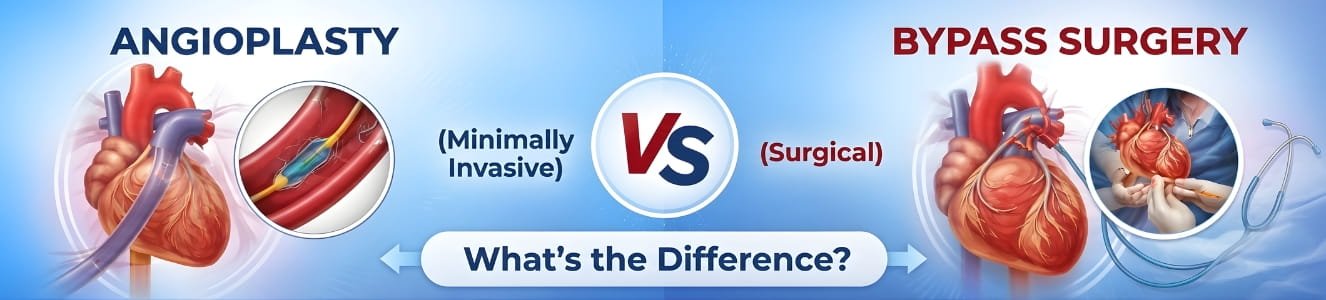
Angioplasty vs Bypass Surgery: What’s the Difference?
Heart disease continues to be one of the leading health concerns in India, affecting people across age groups, especially due to stress, sedentary lifestyles, diabetes, smoking, and unhealthy diets. When arteries supplying blood to the heart become narrowed or blocked, physicians may recommend procedures to restore blood flow and prevent life-threatening complications such as a heart attack.
Two of the most common treatments are angioplasty and bypass surgery. While both aim to improve blood circulation to the heart, they differ substantially in procedure, recovery, risks, and long-term outcomes.
Understanding Coronary Artery Disease
Before comparing the procedures, it’s important to know why they are needed.
Coronary artery disease occurs when fatty deposits (plaque) build up inside the arteries supplying the heart. Over time, these deposits narrow the arteries, reducing blood flow and oxygen supply.
Common symptoms include:
- Chest pain or pressure (angina)
- Shortness of breath
- Fatigue during exertion
- Pain radiating to the arm, neck, jaw, or back
- Sweating and nausea
- Silent symptoms in diabetics
If the blockage becomes severe or sudden, it can lead to a heart attack.
What Is Angioplasty?
Angioplasty is a minimally invasive procedure used to open blocked arteries without open-heart surgery.
The most common type is coronary angioplasty with stent placement, also known as Percutaneous Coronary Intervention (PCI).
How Angioplasty Is Performed
- A thin tube (catheter) is inserted through an artery in the wrist or groin.
- The catheter is guided to the blocked coronary artery.
- A small balloon at the tip is inflated to widen the artery.
- A stent (tiny mesh tube) is placed to keep the artery open.
- Blood flow is restored immediately.
The procedure usually takes 30 minutes to 2 hours.
Advantages of Angioplasty
- Minimally invasive (no large chest incision)
- Short hospital stay (1–2 days)
- Faster recovery
- Less pain compared to surgery
- Suitable for emergencies (heart attack)
- Can be repeated if needed
Limitations of Angioplasty
- Risk of artery re-narrowing (restenosis)
- Not ideal for multiple complex blockages
- May require lifelong medications
- Not suitable for severely calcified arteries
- Some patients may need repeat procedures
What Is Bypass Surgery?
Bypass surgery, medically called Coronary Artery Bypass Grafting (CABG), is a major open-heart surgery.
It creates a new pathway for blood to flow around blocked arteries using healthy blood vessels taken from other parts of the body.
How Bypass Surgery Is Performed
- The chest is opened through the breastbone.
- The surgeon takes a healthy blood vessel from the leg, arm, or chest.
- This vessel is grafted to bypass the blocked artery.
- Blood flows through the new route to reach the heart muscle.
The surgery typically lasts 3–6 hours and requires specialised cardiac care.
Advantages of Bypass Surgery
- More effective for multiple blockages
- Long-lasting results
- Reduces symptoms significantly
- Lower chance of repeat procedures
- Better outcomes in diabetic patients
- Improves survival in severe disease
Risks and Challenges
- Major surgery with a longer recovery
- Hospital stay of 5–7 days or more
- Visible scar on the chest
- Higher initial risk compared to angioplasty
- Possible complications such as infection or stroke
- Requires rehabilitation and lifestyle changes
Angioplasty vs Bypass Surgery: Key Differences
| Feature | Angioplasty | Bypass Surgery |
|---|---|---|
| Type of procedure | Minimally invasive | Open-heart surgery |
| Anaesthesia | Local + sedation | General anaesthesia |
| Incision | Small puncture | Large chest incision |
| Hospital stay | 1–2 days | 5–7 days or more |
| Recovery time | 1–2 weeks | 6–12 weeks |
| Suitable for | Single or a few blockages | Multiple or complex blockages |
| Durability | Moderate | Long-lasting |
| Risk level | Lower initially | Higher initially |
| Repeat procedures | More likely | Less likely |
Which Procedure Is Better?
There is no one-size-fits-all answer. The choice depends on several medical factors.
Doctors consider:
- Number of blocked arteries
- Severity of blockage
- Location of blockages
- Age of the patient
- Overall health condition
- Presence of diabetes
- Heart function
- Previous heart procedures
When Doctors Prefer Angioplasty
Angioplasty is usually recommended when:
- Only one or two arteries are blocked
- Blockage is not very complex
- Patient is at high risk for major surgery
- Immediate treatment is required (heart attack)
- Patient prefers a minimally invasive approach
When Bypass Surgery Is Recommended
Bypass surgery is preferred when:
- Multiple arteries are severely blocked
- The left main coronary artery is affected
- Blockages are long or heavily calcified
- Angioplasty has failed previously
- The patient has diabetes with a complex disease
- Heart function is significantly reduced
Recovery Comparison
After Angioplasty
- Walking for hours
- Return to routine activities in a few days
- Resume work in 1–2 weeks
- Minor discomfort at the catheter site
After Bypass Surgery
- Initial recovery in ICU
- Hospital stay is about a week
- Full recovery may take 2–3 months
- Gradual return to physical activity
- Cardiac rehabilitation recommended
Lifestyle Changes Are Essential After Both Procedures
Neither angioplasty nor bypass surgery cures heart disease permanently. They treat blocked arteries but not the underlying causes.
Patients must adopt heart-healthy habits to prevent future complications.
Important Lifestyle Modifications
- Quit smoking completely
- Control blood pressure and diabetes
- Eat a balanced, low-fat diet
- Exercise regularly (as advised)
- Maintain a healthy weight
- Manage stress effectively
- Take prescribed medications regularly
Risks If Treatment Is Delayed
Ignoring symptoms of coronary artery disease can lead to serious consequences:
- Heart attack
- Heart failure
- Dangerous arrhythmias
- Sudden cardiac death
- Permanent heart muscle damage
Early diagnosis and timely intervention can save lives.
Common Myths About Angioplasty and Bypass Surgery
❌ Myth: Angioplasty is always safer than surgery
✔ Reality: It depends on the patient’s condition.
❌ Myth: Bypass surgery means the heart is replaced
✔ Reality: The heart remains intact; only blood flow is rerouted.
❌ Myth: After treatment, heart disease is cured
✔ Reality: Disease progression can continue without lifestyle changes.
❌ Myth: Young people don’t need these procedures
✔ Reality: Heart disease is increasingly seen in younger Indians.
When Should You See a Doctor?
Seek immediate medical help if you experience:
- Persistent chest pain
- Breathlessness on mild exertion
- Sudden sweating or dizziness
- Pain spreading to the arm or jaw
- Symptoms worsening over time
Early consultation can prevent emergencies.
Frequently Asked Questions (FAQs)
What is the main difference between angioplasty and bypass surgery?
Angioplasty is a minimally invasive procedure that opens blocked arteries using a balloon and stent, while bypass surgery is an open-heart operation that creates a new route for blood flow around blocked arteries.
Which procedure is safer – angioplasty or bypass surgery?
How long does recovery take after angioplasty?
How long does recovery take after bypass surgery?
Can blocked arteries return after angioplasty?
Is bypass surgery permanent?
Both angioplasty and bypass surgery are life-saving procedures that have helped millions of patients worldwide live longer and healthier lives. The right choice depends on individual medical conditions, the severity of blockage, and expert evaluation by a cardiologist and cardiac surgeon.
While angioplasty offers a minimally invasive, quick solution for certain cases, bypass surgery provides a more durable option for complex coronary artery disease. Most importantly, long-term success depends on consistent lifestyle changes, medication adherence, and regular follow-up.
If you or a loved one has been advised of either procedure, do not panic. Discuss all options thoroughly with your heart specialist at the Best Cardiology Hospital in Nagpur, understand the benefits and risks, and make an informed decision with confidence
Don’t ignore heart symptoms. Get expert cardiac evaluation and advanced treatment at Synergy Multispeciality Hospital. Early care can save your life – book your consultation today.